I might need a gold star.
I followed through on reading a book like I said I would! (It helps when I’m reading something I actually want to read.) Hooray for executive function actually working for a change!

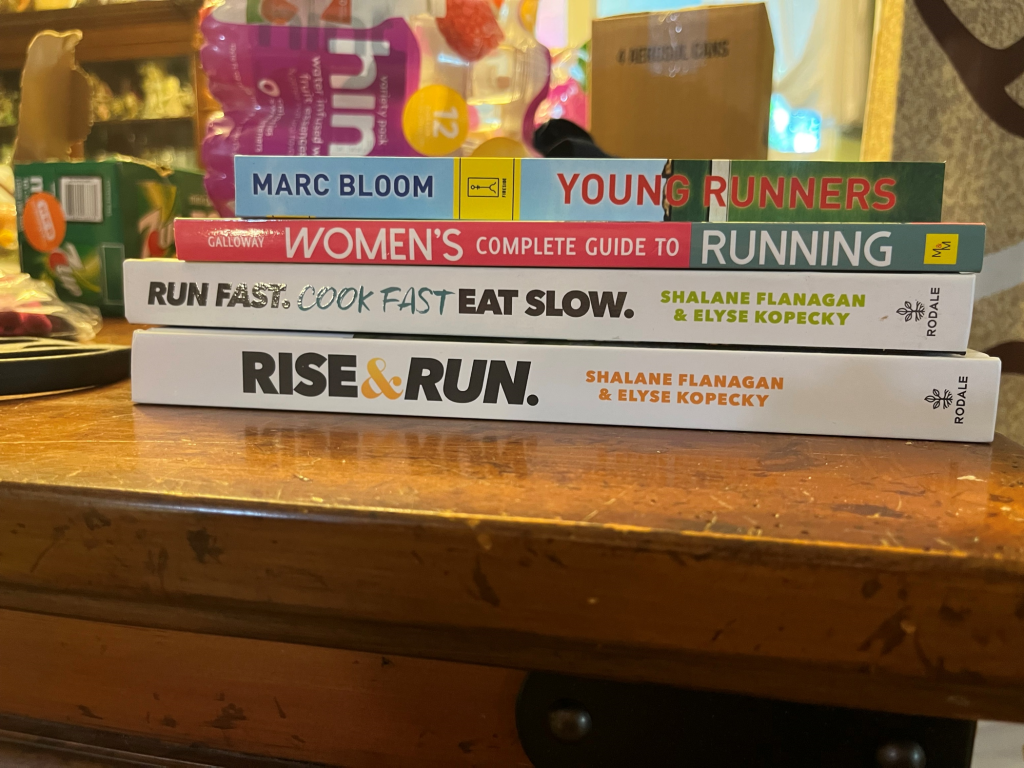
As promised, I read Rise & Run (note that I may get commission from affiliate links, no cost to you) by Olympian Shalane Flanagan and Elyse Kopecky. It was a good read. The gist of the book is pretty simple: mornings are a special time for runners, and we should do things to cherish that time. That whole idea was inspiring enough to get me, the world’s biggest morning hater, to try getting up early for a run! I would call that some strong inspiration!
I did laugh a little at both authors—they had a page each where they shared their morning routines, and they talked like 5:30-6:00 in the morning is early. I know it IS early in most places, but not in Houston. Obviously neither of these ladies is braving my stupid Houston commute!

This is a 3-in-1 book.
It is part inspiration to embrace the morning runner lifestyle, part cookbook, and part training plan.
I think it’s clear that the inspirational part is effective. The descriptions of that pure bliss of getting to sit down for breakfast and coffee are intoxicating by themselves. But, more important for the average person who isn’t just looking at pretty pictures in a book, the authors provide useful, actionable tips for how to make mornings work. They provide ideas like getting everything ready for the morning the night before, and they provide recommendations for kitchen tools to make breakfast prep easier. They also give a shopping list of sorts for the most common ingredients in the recipes.
The most helpful part about this book is the section where they explain which recipes are good for what occasion. For example, they provide a list of recipes that are good for a pre-long run snack, which are good for an after-run breakfast, which are ideal for weekend post-run brunches, and even which ones will help a runner recover from illness or injury. Right now I’m pretty healthy, but as someone who regularly sprains an ankle and is allergic to Texas in general, I think this will turn out to be very useful for me.
What about the food?
One of my concerns about the recipes was that they would be too focused on the types of foods that elite athletes need. I have read other athletic people cookbooks, and that’s an easy trap to fall into. But let’s face it: I’m not Michael Phelps, and I don’t need to be eating 8,000 calories in a day. I’m basically just starting out again, and I need things that are lower calorie, but dense in the good nutrients. Bonus if they are something that will help me lose a few pounds!

Rise & Run references some of the ladies’ other cookbooks, so I went back to Run Fast. Cook Fast. Eat Slow. to understand more of their philosophy on food. They specifically address my concern! (Good job ladies!) Basically, they focus on whole foods that are closer to how they come from nature (so closer to what they looked like on the vine or on the hoof). Less processed food is better for us all, and it comes with all the nutrients and fiber that we actually need. Humans didn’t start eating Fruit by the Foot (my current favorite processed food—don’t judge) until relatively recently in history, so of course our bodies will be happier if we eat the foods that our bodies are actually equipped to eat. I have seen that same idea in various forms in almost all of the different weight loss programs I have tried as well, so I think that idea will stand the test of time (and science).

The other nice detail I found in all the recipes is a little note on whether the recipes are gluten friendly, dairy friendly, vegetarian, or vegan. I am gluten-free (not by choice—my intestines hate me and like to make me wish for cupcakes), so this is very helpful! They also have notes on how to make each recipe faster, how to store the food, and, for those of us with dietary restrictions, how to adapt the recipe, if we can. I wish the whole world was that friendly!
Is the food good?
YES. I tried 3 recipes—the grain-free pineapple coconut superhero muffins, the minute-mug lime-raspberry superhero muffin, and the sunrise juice. Before you ask, there are recipes other than muffins and smoothies in here, but I went with what sounded interesting to me. As I said earlier, I’m gluten-free, so maybe, just maybe, I’m craving baked goods. (Again, don’t judge me please!)
I loved the muffins. The pineapple coconut ones were easy to make, and they had a really good texture. They will be making an appearance as a dessert in the near future because they were so good. They aren’t overly sweet either—just the right amount of sweetness from the pineapple chunks.
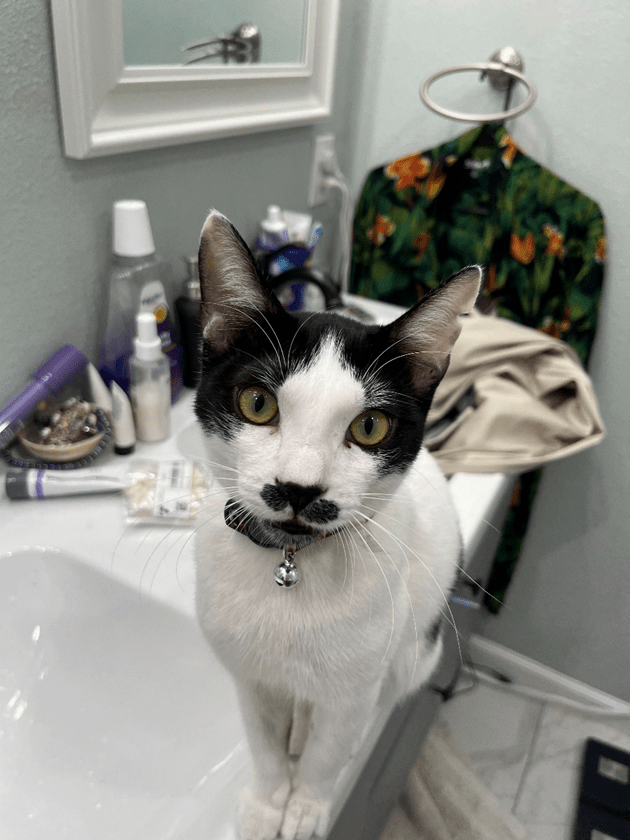
The mug muffin has definitely become a staple of my morning routine. It’s easy and delicious, and my jerk cat likes to try to steal it from me!
Both of those recipes also have ingredients that are readily available from the grocery store. Sometimes it can be tough to find flour substitutes, but I have never had problems finding almond flour or coconut flour. Not all of the recipes are that grocery store friendly though, so you will want to do a quick check to see what you can actually find where you live.
The sunrise juice had great potential, but it didn’t quite do it for us. It’s a simple recipe: oranges, carrots, and ginger, served with sparkling mineral water. All of this sounds good. Fresh OJ is delicious, and carrots play nicely with oranges. The problem was the ginger. The recipe called for a ton of ginger, and it was just a bit much for my family. I’m sure it would be delicious with about half the ginger though.
And the training plan?
This is where it becomes obvious that this book was written by an Olympian. The training plan is definitely advanced, and most definitely too advanced for someone like me. That doesn’t mean it’s bad—it’s a great plan for someone who is at that fitness level. But that someone is most definitely not me! While the marathon training plan is way above what I can do, the stretching plan is reasonable for any runner. Most of the stretches are yoga-inspired, which makes sense. Yoga strengthens many of the same muscles as running, and pairing yoga with running is pretty natural. And let’s be honest: the photo shoot of Shalane Flanagan showing how to do her stretches by a pristine mountain lake in Oregon is enough to make any runner who lives in a Gulf Coast swamp very jealous!


All in all, it’s an inspiring book, complete with tasty food! I will be using this one in my kitchen (and my running) for a while!




















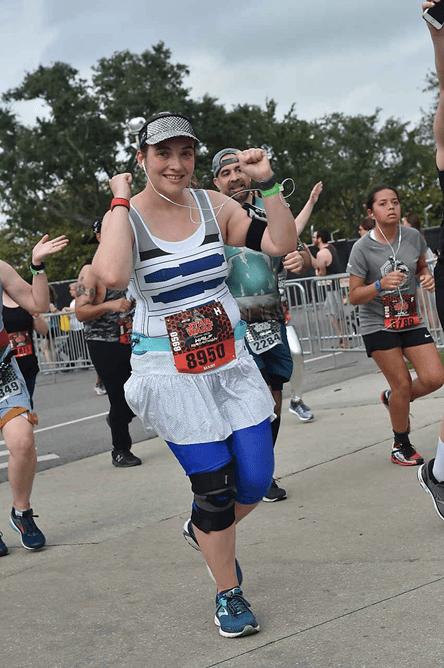




 Running for Mouse Ears